Choosing the Right Indoor Cat Wheel: 2026 Options Compared
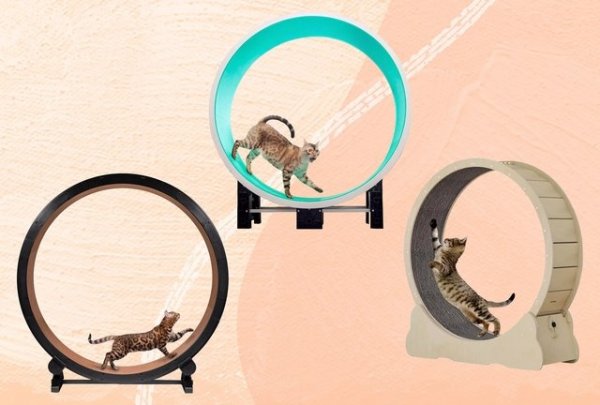
With more cats living exclusively indoors, owners are looking for ways to let them burn off energy without risking the outdoors. A cat exercise wheel—a large, circular treadmill designed for feline running—has become a common solution. But the market offers a wide range of sizes, materials, and price points. This guide compares four distinct models, focusing on their physical dimensions, weight limits, and construction, so you can decide which one might suit your home and your cat's habits.
The first model, the One Fast Cat Exercise Wheel, is a California-made unit that comes in multiple color combinations, including an option with an inline LED wheel. It is designed for cats up to 26 pounds. The wheel itself measures 48 inches in diameter, and the entire unit weighs 28 pounds. Its running surface is made of foam pads that are removable for cleaning—the manufacturer suggests pulling the seam away from the plastic, possibly with some heat. The wheel is suspended on smaller wheels, and the foam provides traction. The base is available in black or white, while the pads come in black, gray, koi pond, or jungle leaves. The LED version has a black inline wheel. For cleaning, the instructions say to take it outside and spray it with a hose.
For those with limited floor space, the Homegroove Cat Exercise Wheel offers a smaller footprint. Its wheel diameter is 35 inches, and the whole unit weighs 27 pounds. It is constructed from natural wood and features a carpet-covered running surface. The manufacturer notes that assembly is more involved, with many screws and wooden panels. However, once assembled, the wheel glides silently, which is a benefit for cats that like to run at night. Homegroove also offers an extra-large version for owners with more space. The wheel is available in black or natural wood.
For Larger Felines
The Naviconvex Cat Wheel is positioned as a good fit for large cats. It has a 45-inch wheel diameter in the XL size, and the unit weighs 45.45 pounds. A 43-inch diameter version is also available for smaller breeds. The wheel features a solid base that resists tipping, and the running surface is a non-slip, bite-resistant carpet that can be removed for cleaning. The wheels use TPE material for quiet operation, and there is a simple locking mechanism for safety. It comes in five colors: black, green, pink, white, and wood.
For high-energy cats, the Coziwow Cat Exercise Wheel is built to handle more intense use. It supports cats up to 50 pounds, which is the highest weight limit among the models compared here. The wheel diameter is 31.5 inches, and the unit weighs 16.53 pounds. It has a non-slip carpeted surface and an internal pulley system for smooth, quiet spinning. Cats can enter from any side. Assembly is tool-free, with pieces that snap together. A fish-shaped latch is included to prevent unsupervised running. It comes in black, white/gray, or gray.
When choosing a wheel, the key factors are the cat's weight, the available floor space, and the noise level. A wheel that is too small may not accommodate a large cat, while a heavy unit may be difficult to move. The One Fast Cat and Naviconvex models are the largest, while the Coziwow is the lightest and easiest to assemble. The Homegroove is a mid-size option that emphasizes quiet operation. All four models are designed for indoor use, and each has its own approach to cleaning and maintenance.
Before purchasing, measure the area where the wheel will be placed, and consider your cat's activity level. A wheel that is too large may dominate a room, while a smaller one might not provide enough running space for a very active cat. The weight limit is also critical—a wheel that is not rated for your cat's weight could be unsafe. Finally, consider the assembly process. Some wheels require more effort to set up than others, and the ease of cleaning the running surface can affect long-term maintenance.
As indoor cats increasingly need structured exercise, cat wheels offer a practical solution. This guide compares four distinct models, highlighting their dimensions, weight limits, materials, and assembly needs to help owners match a wheel to their space and their cat's energy level.
Leave a Comment